
Finding Rutherford County Residents
Start with the fact already in hand. A full address points to the county address layer and the Assessor. A name can lead to an owner record, a court index, a historic directory, or an Archives index, but each result has a different meaning. The county property search is an assessment source. A deed index names parties to an instrument. A directory is a dated listing. None alone establishes that a person is currently at an address.
Rutherford County records are distributed among county offices, local repositories, and Tennessee systems. Use the office that created the record instead of requesting a newly compiled list of people. That also preserves useful gaps. A result absent from a named collection, date span, or spelling is a limited negative result, not evidence that no person existed.
- Normalize the name or complete address, including unit and directional street terms.
- Check the Assessor’s owner, address, or map-and-parcel mode for a parcel lead.
- Compare the situs address with tax mailing and county GIS fields.
- Read a recorded instrument for dated parties and a legal description.
- Use the court, Archives, directory, or election route for its specific record role.
Note: Record the custodian, source date, and the person’s role before drawing a conclusion from a Rutherford County result.
Rutherford County Resident Records Offices
The county’s key residents-directory offices do different jobs. The Assessor maintains tax-purpose property information. The Register of Deeds receives recorded land instruments and warns that it is not a title company. The Election Commission offers registration routes and governed data products. Archives and the Historical Research Center hold earlier local evidence. For an address chain along one road, use the Rutherford County Street Directory.
Rutherford County Register of Deeds
319 North Maple Street, Room 133
Murfreesboro, TN 37130
615-898-7870
Rutherford County Assessor
319 North Maple Street, Suite 200
Murfreesboro, TN 37130
615-898-7750
The County Clerk maintains licenses, county commission minutes, and other record types with their own access rules. Its main office is at 319 North Maple Street, Suite 121. The Clerk page routes a request, but the record type still decides the proper custodian.
Use the Rutherford County Clerk services page for current office contacts.
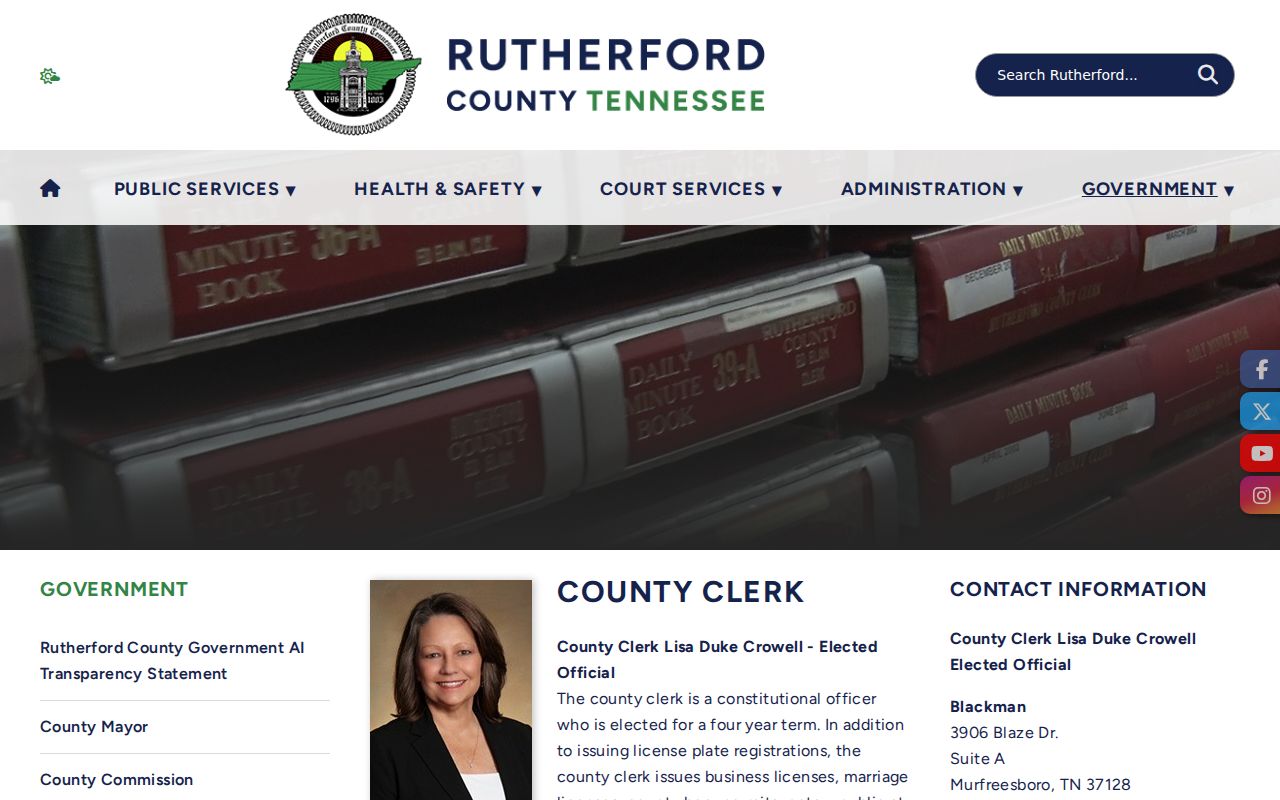
The Clerk’s page helps distinguish clerk services from the Assessor, Register, and Archives routes used in a residents directory search.
Rutherford County Assessor Search Modes
The Assessor Quick Search starts in Real Estate mode and offers Owner, Address, and Map & Parcel options. The assessor asks for at least three characters in practical use. An owner query uses a format such as “Doe John,” without a comma. Address mode can add a street number. Map-and-parcel mode accepts a county parcel format. A result is a lead for ownership and parcel identity, not a current-occupant statement.
| Control | Use | Limit |
|---|---|---|
| Owner | Find an assessment record for a named owner | Owner and occupant can differ |
| Address | Locate a physical parcel and situs | Keep unit detail separate |
| Map & Parcel | Match property records | Verify through a recorded instrument |
| Advanced Street Name | Filter address-keyed assessment records | Displayed advanced fields are optional |
Advanced Search shows parcel, owner, street name and number, neighborhood, year, sale, value, beds, baths, LUC, and book/page filters. A mailing address may be another parcel, a post-office box, a business, or an out-of-county address. Preserve it as tax correspondence, not a claim of residence.
Rutherford County Address Evidence
The county SiteAddressPoint layer supplies address identity fields: road components, full address, units, municipality, ZIP and ZIP+4, subdivision, coordinates, updates, and verification fields. It can distinguish “N Main” from “North Main,” a base number from an apartment, or a postal-city label from a municipal boundary. It is not a resident register.
- Parcel
- A county property identifier used to join assessment and mapping evidence.
- Situs address
- The physical parcel location, which may differ from tax mail.
- Index
- A finding aid that points to a record, not always its image or certified copy.
- Criss-cross directory
- A reverse address directory when a repository holds the specific volume.
County GIS is refreshed periodically and carries a no-warranty notice. Compare the address point, parcel record, and an official recorded document whenever a boundary, unit, or ownership question matters.
Rutherford County Deed Parties
The Register of Deeds connects people to a land transaction through grantor, grantee, instrument date, recording date, book or page, and legal description. That is stronger than copying a name from a result list, but it still describes a recorded role. Trustees, executors, beneficiaries, lienholders, and named parties do not have the same relationship to a parcel. Read the instrument and follow its legal description if a tract split or merged.
Tennessee State Library and Archives microfilm lists a direct and reverse deed index for 1804-1840, followed by more alphabetic and numbered runs. Deed books are listed from 1804-1964 and trust deeds from 1797-1963. A current online Register coverage date was not located. Ask the Register about current index and image access rather than assuming every era is online.
Note: A deed-index name is a lead to an instrument, not a shortcut to a current resident identity.
Current Rutherford County Resident Directories
There is no single countywide resident roster. The usable directory is a set of purpose-specific sources. An assessor result can identify a parcel owner. A court search can identify a filing party. Election data is governed separately. Community association pages may offer public contact or governance information, but no countywide association roster was located. A one-person trail needs a second, independent custodian, as explained in the Rutherford County Resident Lookup.
| County source | Record role | Keeper | Access |
|---|---|---|---|
| Property record | Owner, parcel, situs, mailing context | Assessor | Online and office |
| Land instrument | Grantor, grantee, legal-description lead | Register | Index and office route |
| Registration status | Individual election route | Election Commission | County entry page |
| Historic indexes | Named birth, death, marriage, will collections | Archives | Index, call, email, or visit |
The county voter information page routes registration, polling, absentee, identification, and election-office questions. The research did not expose the state tool’s exact fields, cadence, or results. Link to the official entry instead of reproducing an unverified form.

The entry is a status and election-services route, not proof that a named person now occupies a particular address.
Rutherford County Court Name Search
Rutherford County moved public trial-court search to rutherford.tncrtinfo.com on July 1, 2025. The form offers Party Name, Match All Search Terms, Case Year, Case Number, Circuit Court, General Sessions, Clerk and Master, plus Civil and Criminal selections. Turnstile is required before search. The research captured fields and search-help behavior rather than inventing a sample docket.
Use one court office and a name, year, or case number where possible. The portal caps results at 2,500, considers the first ten terms, supports quoted phrases, and allows returned columns to be sorted. A name hit is not a conclusion about identity, liability, or current status. Sealed and restricted records may not appear. Contact the court office for a specific document or older material.
Open the Rutherford County Case Search to review its current controls.
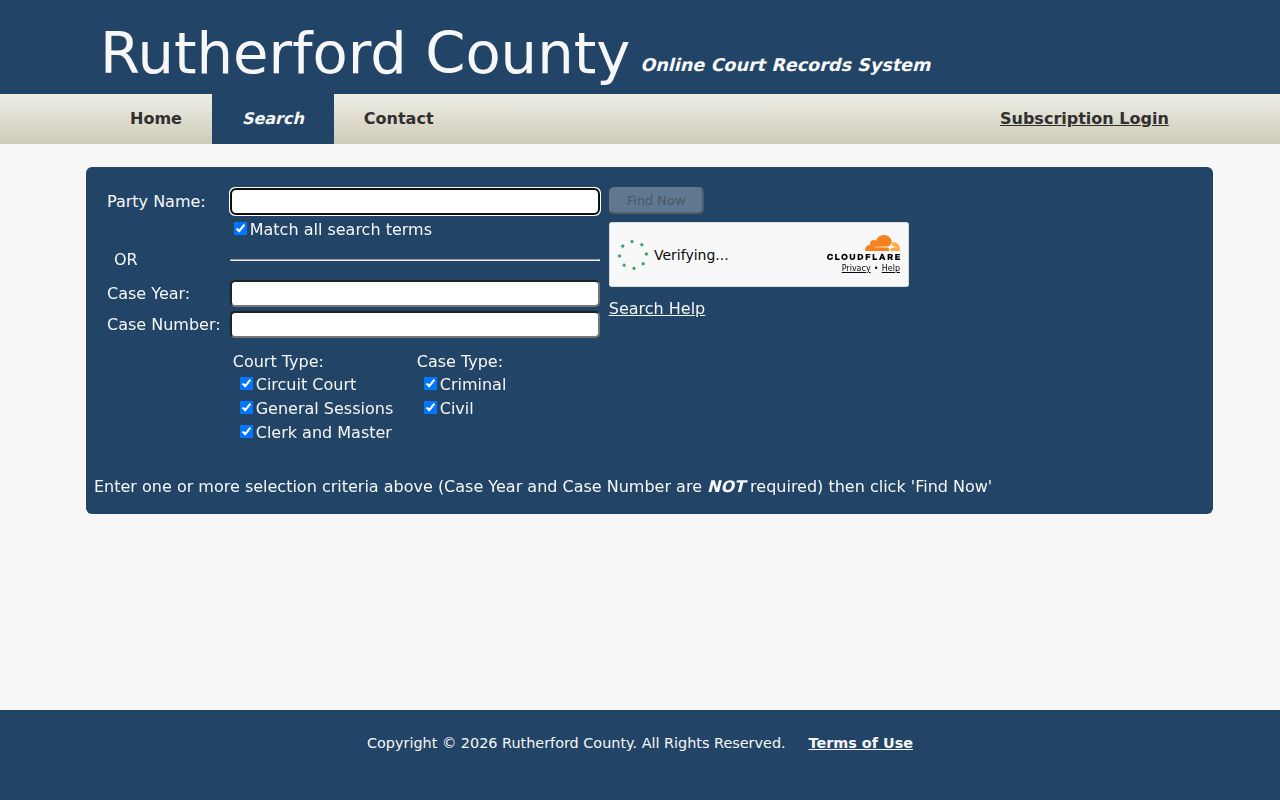
The court controls show why a court-office and case-year check is more precise than a broad name query.
Rutherford County Vital and Archive Trails
Tennessee Vital Records maintains birth, death, marriage, and divorce records, while Rutherford County Archives offers local indexes with named coverage periods. Under T.C.A. § 68-3-205, births are closed for 100 years and deaths, marriages, divorces, and annulments are closed for 50 years. A restricted certificate is not an ordinary name-search result. Eligibility, relationship, identification, and request type control access.
The Archives lists births, deaths from 1881-1939, marriages from 1804-1888 and 1889-1940, and wills from 1804-1899 and 1900-1947. Its death index uses Name, Year, and Entry_or_Page. The birth index warns of gaps in original-register coverage. Call, email, or visit for the underlying register, file, microfilm, or image rather than treating an index line as a certificate.
See the Tennessee vital application inventory for current certificate categories.
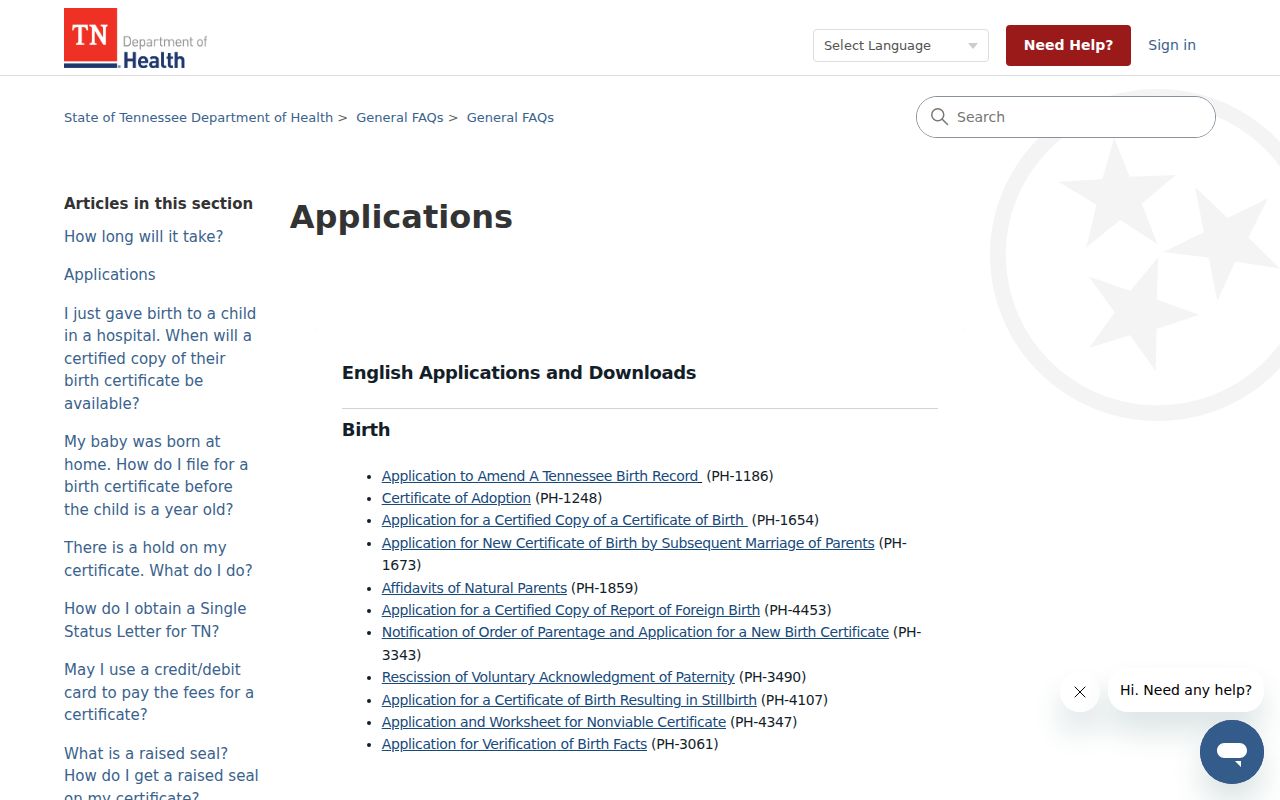
The application inventory helps match a request to its certificate category; it does not remove confidentiality or eligibility rules.
Rutherford County Voter Data Limits
Rutherford County separates individual registration from paid voter-data products. The election-data page describes CD data, printed lists, and labels under product-specific rules. The CD can include one-to-ten-year voting history. Printed lists and labels use mailing-address information, and the page says Social Security numbers are not included. The research found a broken county order-form link, so confirm the current order method directly with the Election Commission.
A registration or mailing-address entry does not establish ownership or present occupancy. Keep election data as a dated record role. For names shared by several people, compare it with a different custodian and fact, such as a deed legal description or an archive collection year.
Review Rutherford County voter-data information before ordering.
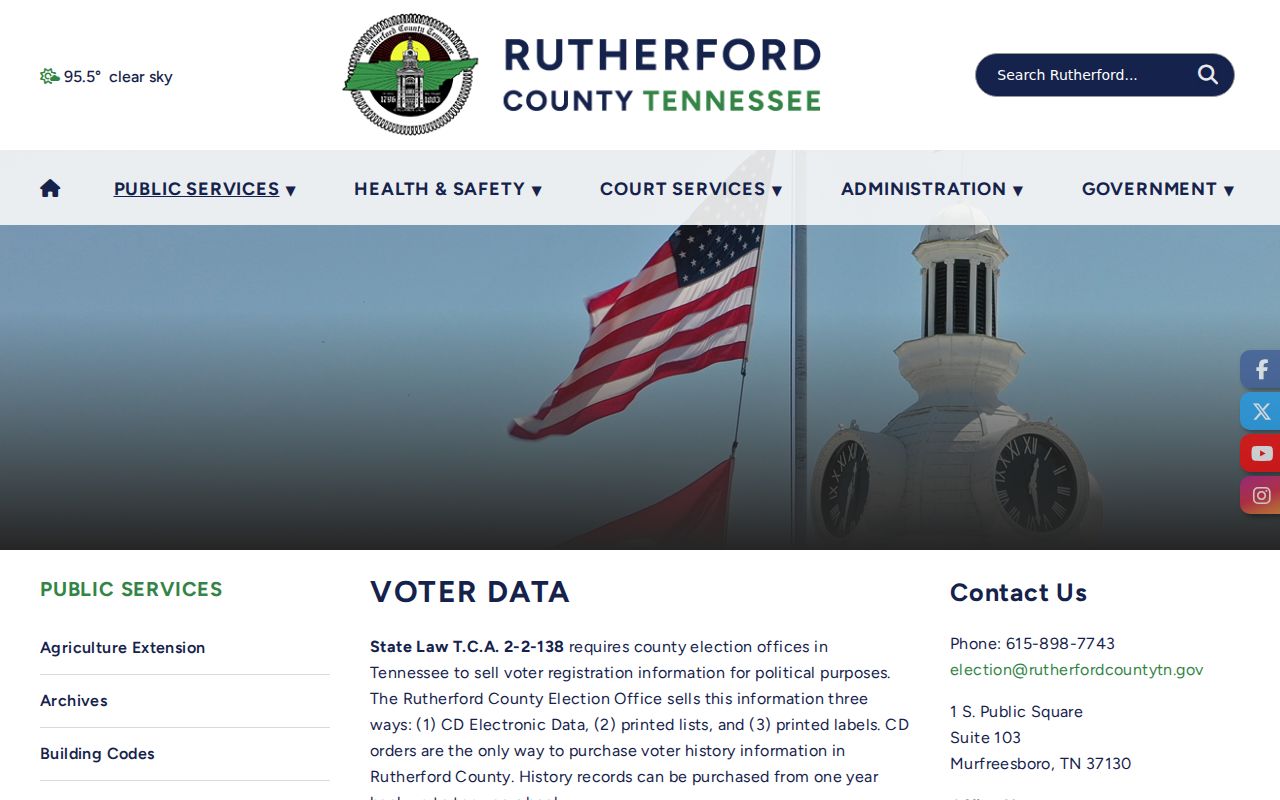
The product categories reinforce that election information is governed data, not an open countywide household list.
Rutherford County Public Records Requests
The Tennessee Public Records Act, T.C.A. §§ 10-7-501 et seq., gives Tennessee citizens a statutory right to inspect public records unless an exception applies. A request should identify an existing record, custodian, date range, address, parcel, case number, or clear key words. The law does not require an agency to create a new report, compile a residents directory, answer a research question, or certify that no record exists.
Rutherford County’s form supports inspection or copy requests, estimate-waiver choices, and on-site, mail, electronic, or other delivery preference. Inspection has no fee. State guidance describes a seven-business-day framework when a record is not promptly available: access, written denial with legal basis, or acknowledgement with a reasonable estimate. Send a narrow request to the actual custodian.
Read the Tennessee Public Records Act FAQ before submitting a request.
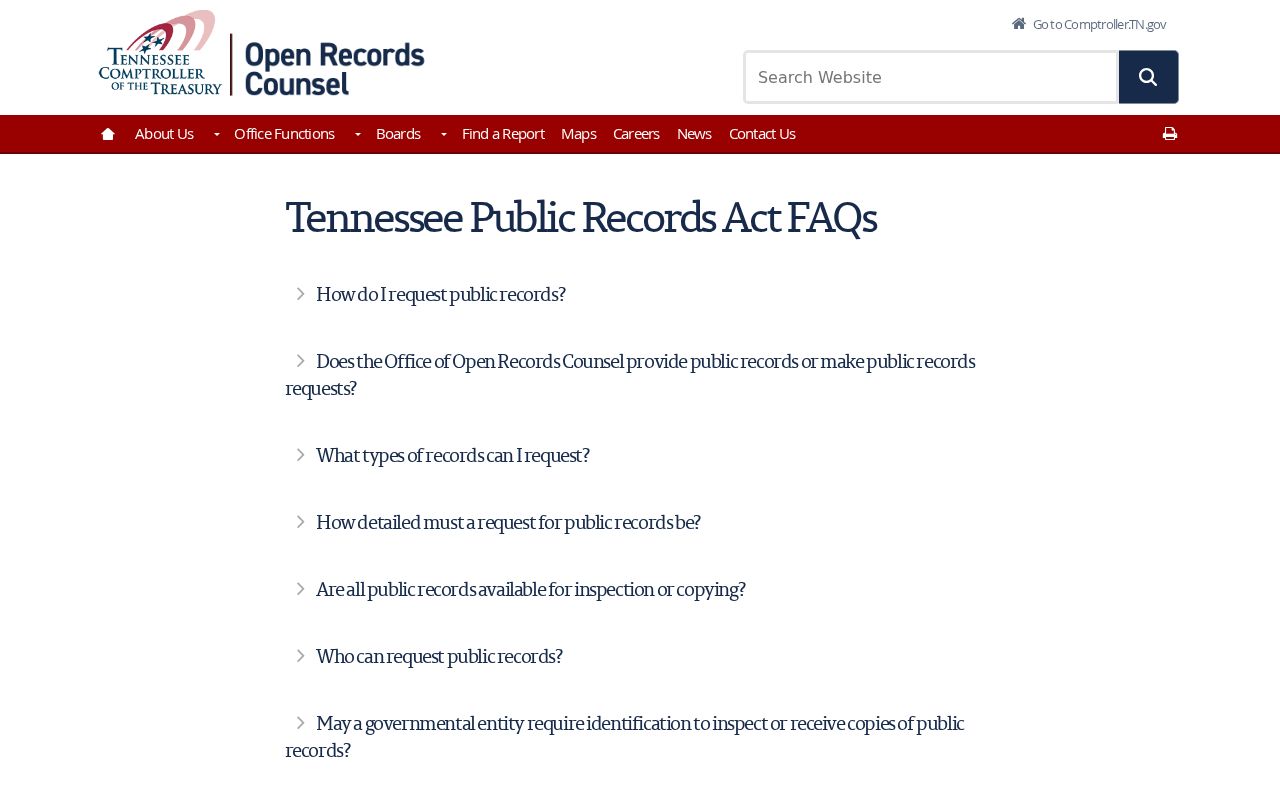
The state guidance confirms the value of a focused existing-record request and a documented custodian.
Historical Rutherford County Resident Directories
Rutherford County’s historic trail includes the Archives, Historical Research Center, Polk city-directory catalog entries, tax records, newspapers, deeds, and maps. The Nashville Public Library catalog lists Polk editions for Murfreesboro-Smyrna-La Vergne, including Rutherford County, in 1998, 1999, 2000, 2001, 2003, and 2005. It also lists Smyrna-La Vergne editions for 1994 and 1996. A catalog record confirms a title and year, not a scan, shelf location, or complete run.
The Historical Research Center operates in the Archives complex at 435 Rice Street. Archives holdings include probate and court files, county maps, tax records from 1877-2012, and Daily News Journal microfilm from 1931-1992. The Library of Congress 1878 map names landowners, roads, tracts, insets, and business-directory material. The Rutherford County Directory Book provides the collection history.
Rutherford County Records Through Time
Rutherford County was organized in 1803 and local Archives material reaches to 1804. An older address question may begin with a deed tract, tax list, marriage index, will, newspaper, cemetery, or the 1878 landownership map rather than a current parcel number. Murfreesboro’s county-seat lots were first sold in 1812, so early records can use lot, tract, or town language instead of a modern street number.
Use a verification trail, not a name guess. Pair an owner record with an instrument, an archive index with its register, or a dated directory line with tax or deed evidence. State what the record actually shows and keep uncertainty visible. That makes the residents directory useful for family history, estate questions, reconnection, civic research, and property context without turning sparse clues into personal claims.