
Rutherford County City Directory Collections
Located catalog records establish several useful Rutherford County editions, not one uninterrupted countywide run. The Nashville Public Library catalog identifies Polk volumes titled Murfreesboro-Smyrna-La Vergne, TN Polk city directory, including Rutherford County. It also identifies a narrower Smyrna-LaVergne title. Those records establish the title, publisher series, and listed year, but they do not prove that the volume is digitized or presently on a particular shelf. Treat a catalog hit as a route to a copy, then ask the holding library whether the item is on site, on microfilm, or available through interlibrary loan.
| Collection | Years | Where Held | Access |
|---|---|---|---|
| Murfreesboro-Smyrna-La Vergne Polk city directory, including Rutherford County | 1998, 1999, 2000, 2001, 2003, 2005 | Nashville Public Library catalog | Catalog record; confirm the physical copy |
| Smyrna-LaVergne Tennessee city directory | 1994, 1996 | Nashville Public Library catalog | Catalog record; confirm the physical copy |
| RCHS historical directory citation | 1950, 1962 | Rutherford County Historical Society article | Readable examples; inspect the original volume for full lines |
| Archives and HRC companion collections | Collection-specific dates | Rutherford County Archives and Historical Research Center | Call, email, or visit for access |
Do not turn the listed dates into a continuous span. The cataloged Polk record skips some years, and an official source did not identify a complete local reverse-directory or criss-cross run. That limitation is useful information: it tells a researcher to document the volume used instead of assuming that a missing name or address was absent from the county.
Note: Record the title, city coverage, publisher, and directory year before comparing one entry with another.
Rutherford County Polk Directory Years
The two catalog titles have different geographic wording. The Murfreesboro-Smyrna-La Vergne Polk title says that it includes Rutherford County, while the Smyrna-LaVergne title is a more focused municipal edition. That difference can affect which names, streets, and businesses appear. Search the title that matches the place being studied, then compare nearby listed years rather than treating a single issue as a complete picture. A name can appear in a business listing, a household line, a cross-reference, or none of those places in a particular edition.
The county Archives Online Resources list is a second route when a directory clue points toward a life event or probate record. It names birth, death, marriage, and will indexes, plus other historical holdings. The indexes are pointers, so preserve the collection, date, and page or entry reference and request the underlying material when it matters.
The county's Archives Online Resources collection list shows the range of indexes and holdings available for that follow-up.
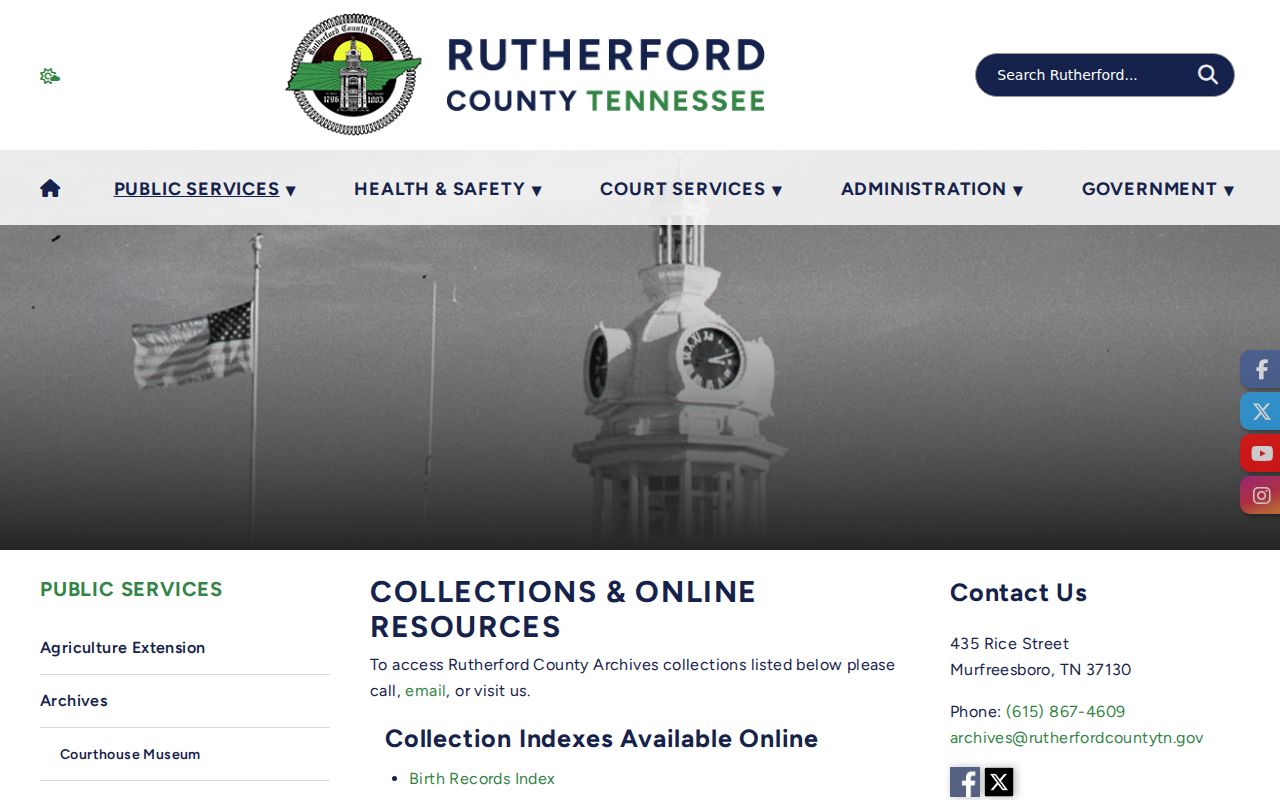
Use the collection list to choose a dated archive source, then request the underlying register, file, or image for a directory lead.
- Use the 1994 and 1996 Smyrna-LaVergne editions for a narrower municipal comparison.
- Use the identified 1998, 1999, 2000, 2001, 2003, and 2005 Polk records as separate annual snapshots.
- Mark each unlocated year as a gap, not as proof that no directory was issued.
Rutherford County Directory Research Rooms
Rutherford County Archives and the Rutherford County Library System Historical Research Center form the main in-person route for historical work. Archives lists its location at 435 Rice Street in Murfreesboro, with weekday access from 8:00 to 4:00, and directs visitors to call, email, or visit for collection access. The HRC operates in the Archives complex and lists 615-947-9110 and hrc@rclstn.org. Ask for a call number and the access form of the specific directory before making a trip. The research did not locate an official HRC shelf list for every city directory volume.
The Rutherford County Library System locations page helps confirm the library route and its local research access points.
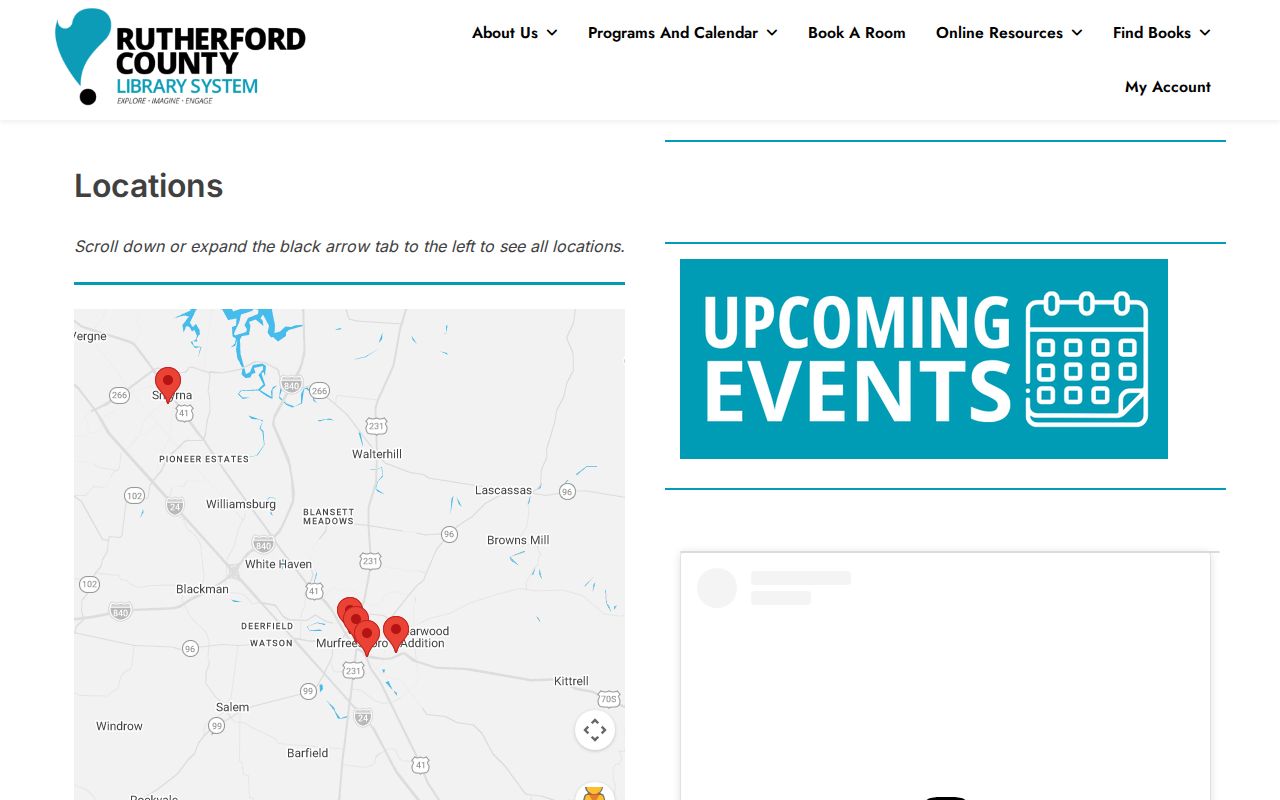
Use the location information to arrange access, then ask whether a particular directory is on a shelf, on microfilm, or must be requested.
RCLS also identifies city birth records for 1881 through 1915, Tennessee State Library and Archives resources, card-access databases, and a digital newspaper route. Licensed database fields vary, so a researcher should ask staff how that service is accessed rather than assuming a public web search exposes every collection.
Read a Rutherford County City Directory
Read the whole line before drawing a conclusion. The accessible Rutherford County historical examples show that a directory entry can identify a person, a business or entity, an officer role, and an office or street context. Those fields do not carry the same meaning. A business officer on a directory line is not automatically a household occupant, and an address connected with a company is not automatically a residence. Copy the spelling as printed, note the directory year, and keep the entry type with the transcription. That preserves a trail others can check against the volume.
| Directory year | Places the entry in the edition being consulted. |
|---|---|
| Personal name | Identifies the person named in the cited historical example. |
| Business or entity | Shows the company context where the entry is a business listing. |
| Officer or role | Distinguishes a president or vice president from an unlabelled name. |
| Office or street context | Supplies the place reference that should be checked in the original volume. |
- Criss-cross directory
- A directory arranged by address rather than by personal name. No official Rutherford County year run was located, so ask HRC or Linebaugh for a specific volume.
- Householder index
- An index that organizes household names. Verify that an edition actually includes one before relying on it.
- Abbreviation key
- The explanatory key printed in some directory volumes. Photograph or transcribe it when present because its marks give context to the entry.
A directory is a dated listing, not proof of continuous residence or ownership. For a modern address-based comparison, the Rutherford County Street Directory route uses current parcel and address records instead of rebuilding this historical shelf.
Note: Preserve business roles and address context as printed before deciding whether an entry relates to a household.
Rutherford County Directory Business Entries
The Rutherford County Historical Society gives a concrete way to read historical volumes without pretending that the article is a full directory scan. Its Remembering Rutherford article discusses a 1950 Murfreesboro City Directory and a 1962 City Directory. The 1950 reference names Home Roofing & Building Co. and identifies Carl Hickerson as president. The 1962 reference again names the company and Hickerson, then identifies Builders Supply Inc., Joe B. Jackson as vice president, and an office context on West Castle.
The Historical Society's local-history publications provide related collection leads.
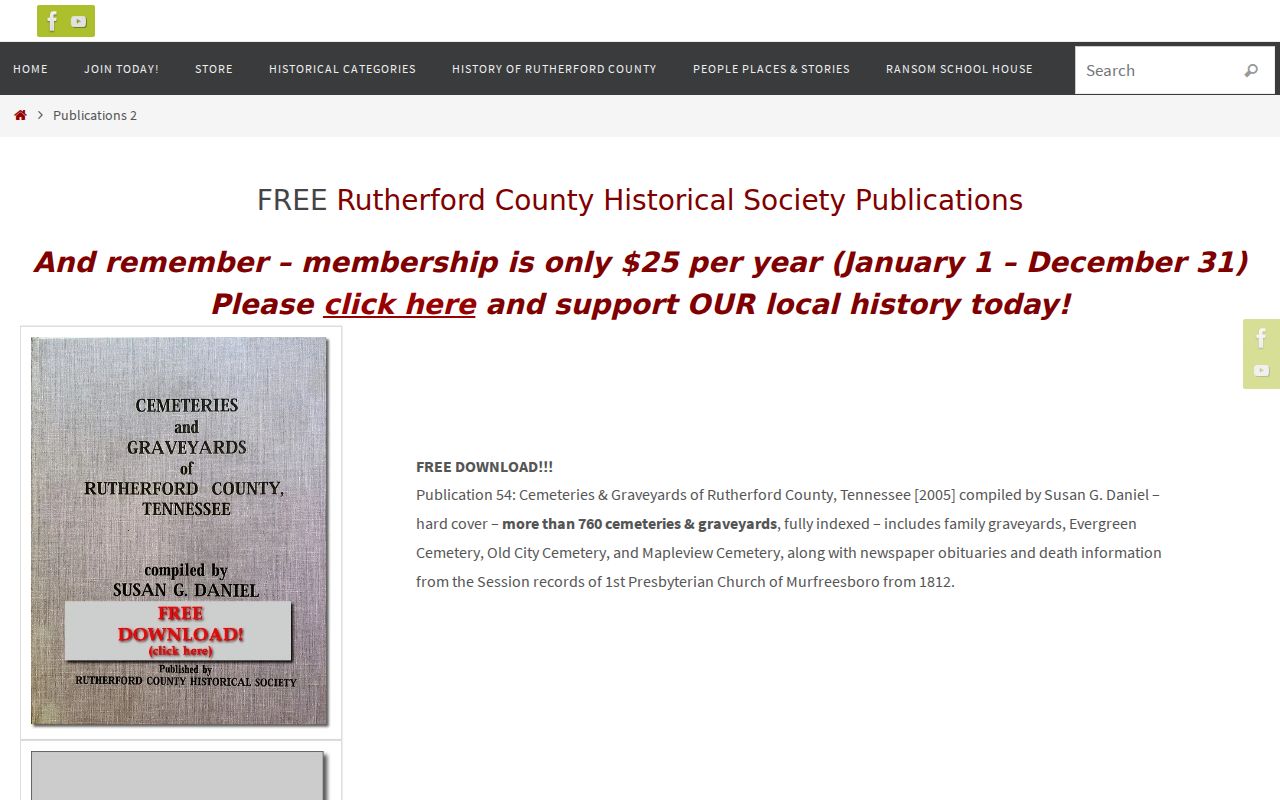
These references make useful cross-check leads, but the original directory line is still needed for its exact address and classification.
The same article mentions a 1957 lease and the 101-05 Northwest Broad Street context. That supports property-history follow-up, not a claim about who lived there in a given year.
Rutherford County Maps Before Street Numbers
Older work can reach a point where the modern address no longer fits the record. The 1878 Library of Congress landownership map supplies a local bridge from a surname to a place: it depicts roads, railroads, tract lines, landowner names, town insets, a name list, business directories, and a population table. It is especially useful when a historical directory clue needs to be tested against an older tract or town reference.
The map records landowner and geography context, not a household census. Rutherford County was organized in the early state period, and Murfreesboro lot sales began in 1812, so early material may use lot, tract, or town language. Preserve the map date and the exact label you find. Do not convert a mapped landowner into a resident without another dated record.
Trace Rutherford County City Directories
A household trail works best when each source keeps its own role. Located editions provide annual snapshots. A deed records an interest in property. Tax material records an assessment or tax relationship. Census material is a dated enumeration. They can reinforce one another, but none proves every part of a person’s story by itself. Keep a citation for each year and leave a blank where the evidence is absent.
- Start with the newest located directory and copy the exact name, street spelling, classification, telephone, and cross-reference.
- Move backward through the cataloged Polk editions, noting missing years, unit changes, and differences in municipal coverage.
- Ask HRC or Linebaugh whether a reverse or criss-cross volume exists for the needed year, rather than assuming one does.
- Compare the name and address with assessor fields, GIS address information, a Register of Deeds instrument, and Archives tax or newspaper material.
- For earlier households, pair the directory clue with the 1878 map, Archives indexes, TSLA microfilm, deed abstracts, and census records.
When a person disappears, record the uncertainty. A move, death, changed listing practice, business change, or a missing volume can all explain the gap. Newspapers, marriage and will indexes, cemetery publications, and family-history evidence can help distinguish people with the same name while preserving the source page and date.
Note: A result is strongest when its date, collection name, and original wording remain attached to the citation.
Rutherford County Archive Directory Leads
Directories gain value when they are followed into the collections around them. Archives holdings include Chancery loose files and minutes from 1845 through 2004, Circuit material from 1845 through 1995, historic probate and court records from 1804 through 1914, county maps, tax records from 1877 through 2012, and Daily News Journal bound volumes or microfilm from 1931 through 1992. The death index covers 1881 through 1939, while the listed birth registers have discontinuous coverage. An index hit should lead to the register, file, image, or other underlying source.
The Historical Research Center genealogy resources describe the library route for digital newspapers and research databases.

Use a directory name or address as a search lead, then record which archive or library collection supplied the confirming detail.
For Smyrna research, HRC also received Katherine Haynes Walkup history files, genealogy, family histories, and photographs. That is a focused local-history lead when a directory name connects to Smyrna, not a substitute for checking the relevant volume.
Rutherford County Directory Gaps
Several gaps deserve an explicit question at the reference desk. No official source named a complete HRC or Linebaugh shelf run, a full reverse-directory sequence, or a separate Rutherford obituary-name database. Ask whether a missing volume is on site, on microfilm, or available through another library. For obituary leads, Archives and RCLS newspapers, the Historical Society’s cemetery publication, and First Presbyterian session-death references offer better starting points than an assumed database.
Directories are valuable because they are narrow and dated. Their limits are equally valuable. A careful Rutherford County directory search identifies the particular edition, marks the coverage gap, and asks the custodian for the next source.